Launch offer — valid today only

📄 Digital book in PDF · read it on your phone or print it

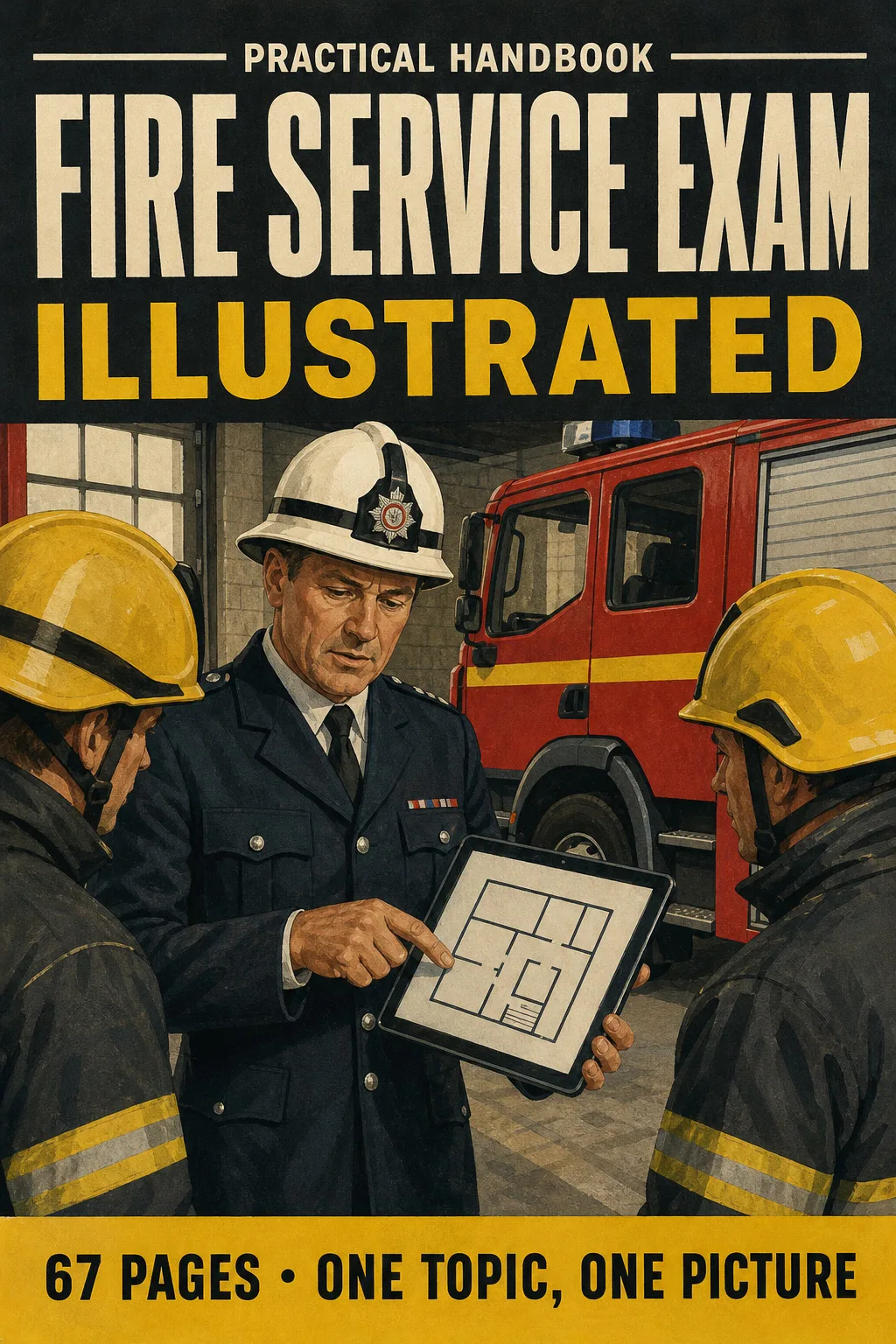
IFE and Promotion Exams, in Drawings One Topic on Every Page

Flashover and backdraught, extinguisher colour bands, nozzle flow, the Fire Safety Order notices, FD30S fire doors, the decision control process, Hazchem placards and command words. Every topic has its own page: the drawing first, then what you need to remember. 67 illustrated pages.

START REVISING THIS WAY

🔒 Secure checkout · PDF by email · 30-day guarantee

Every topic, its own pageEach fire, rule or calculation drawn, with the explanation beside it
67 illustrated pages8 parts, from the fire triangle to the last-week checklist
Up-to-date sourcesFire Safety Order 2005, Approved Document B and National Operational Guidance
PDF by emailFormat

Look Inside the Book

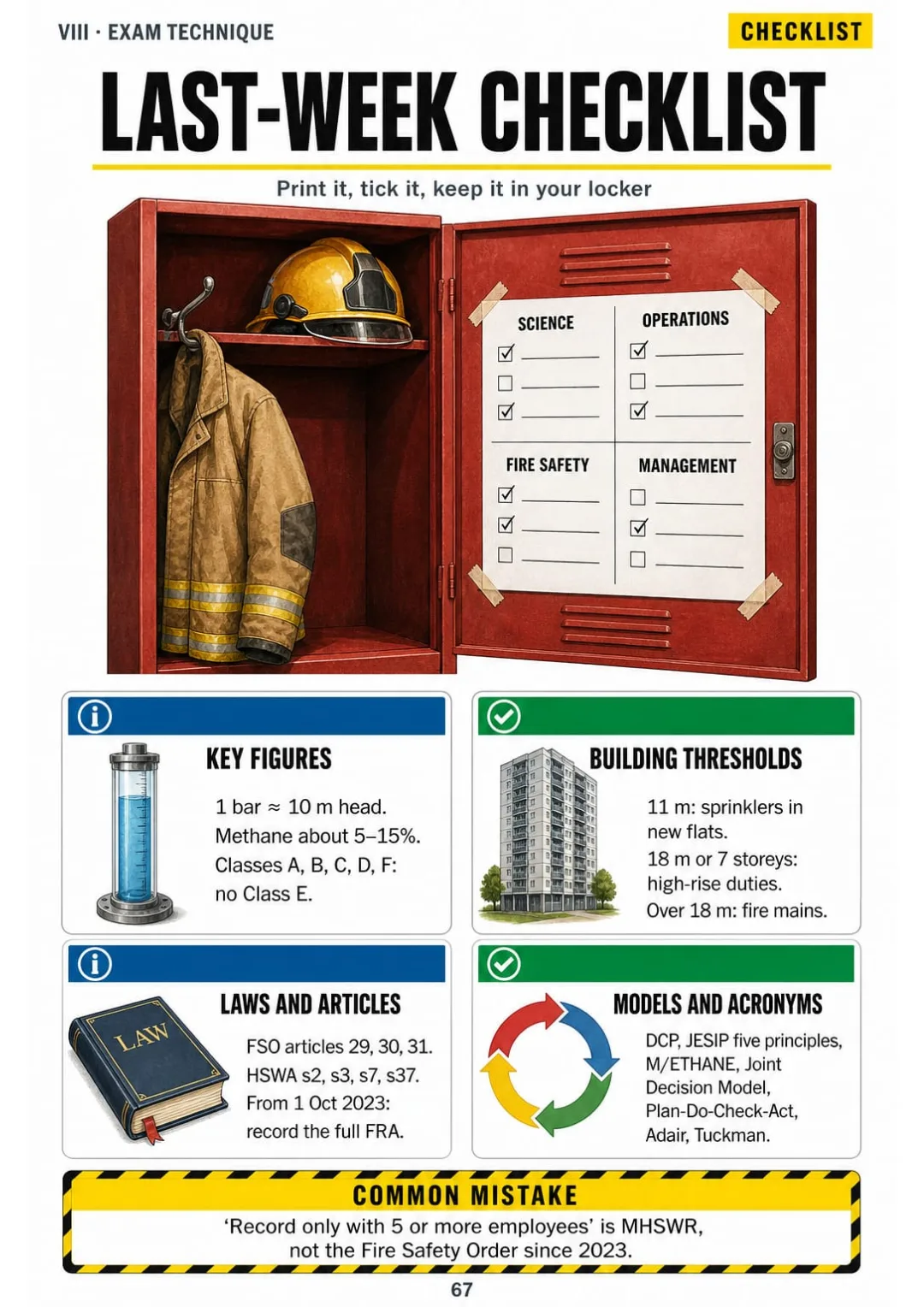
Every page has one large drawing and a box with the figures, articles and steps you need to know:

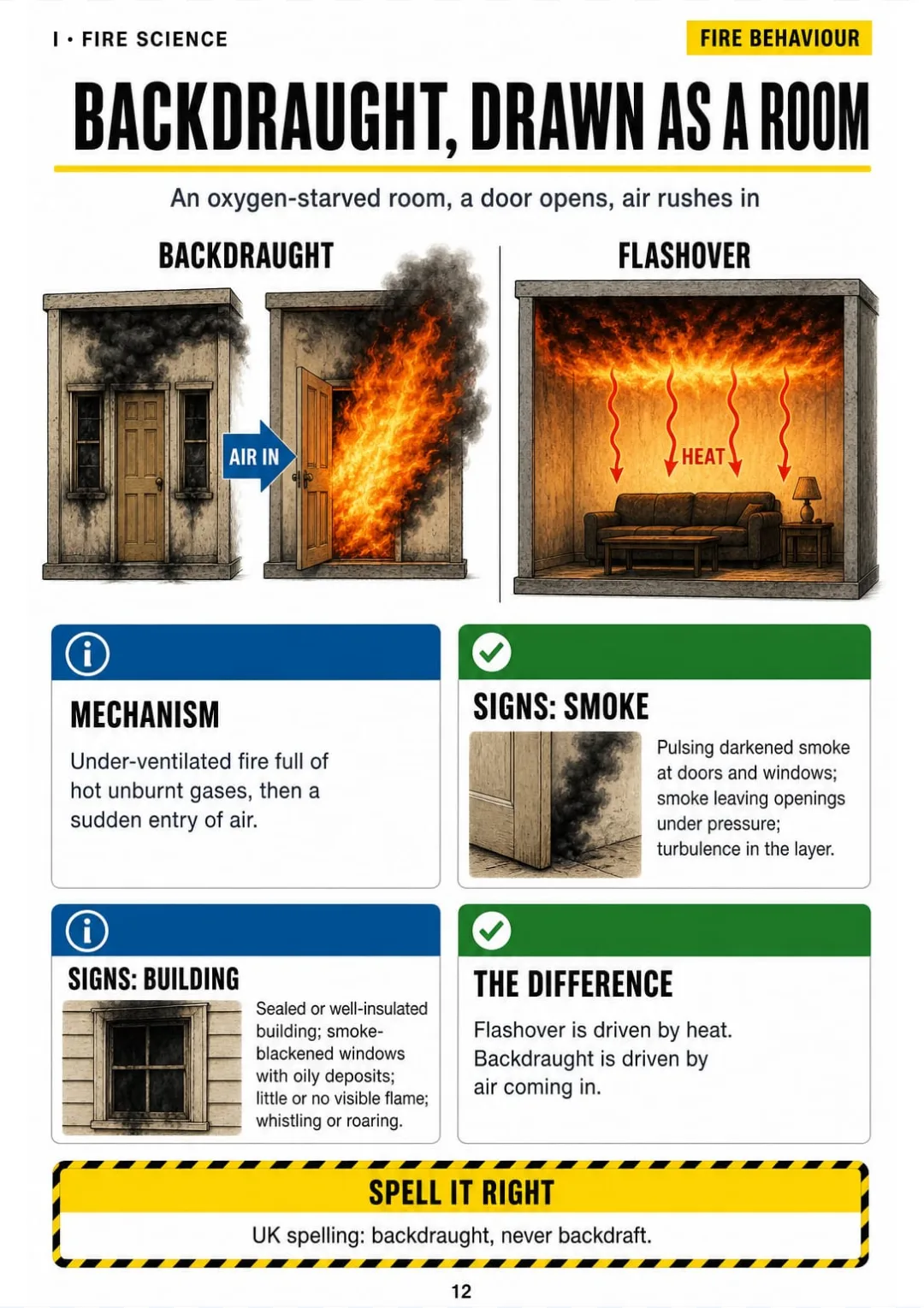
Backdraught: under-ventilated fire plus sudden air. Flashover: heat.
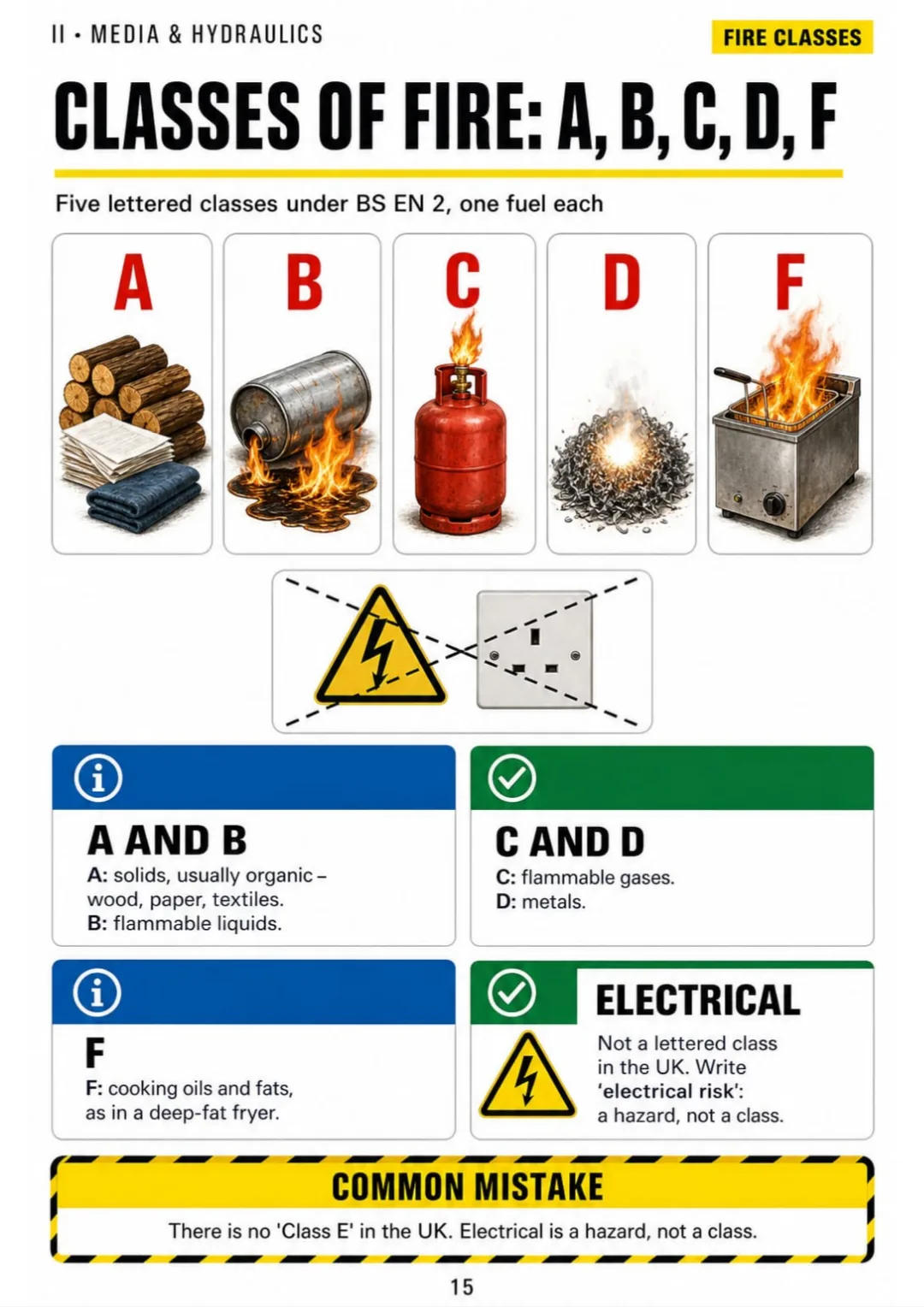
BS EN 2: A solids · B liquids · C gases · D metals · F cooking oils – no Class E
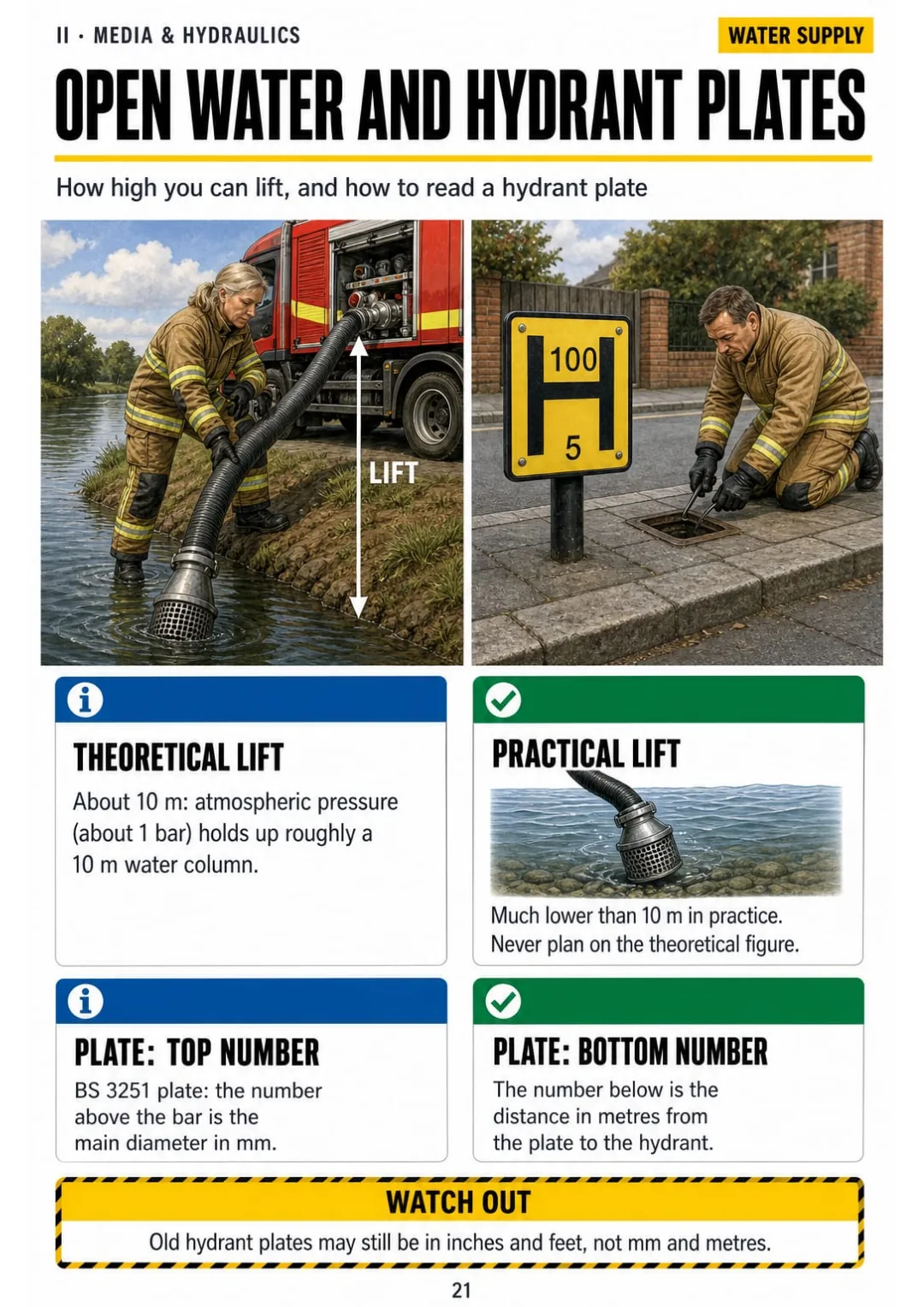
Lift: theoretical ≈ 10 m, practical much lower · hydrant plate: mm above, metres below
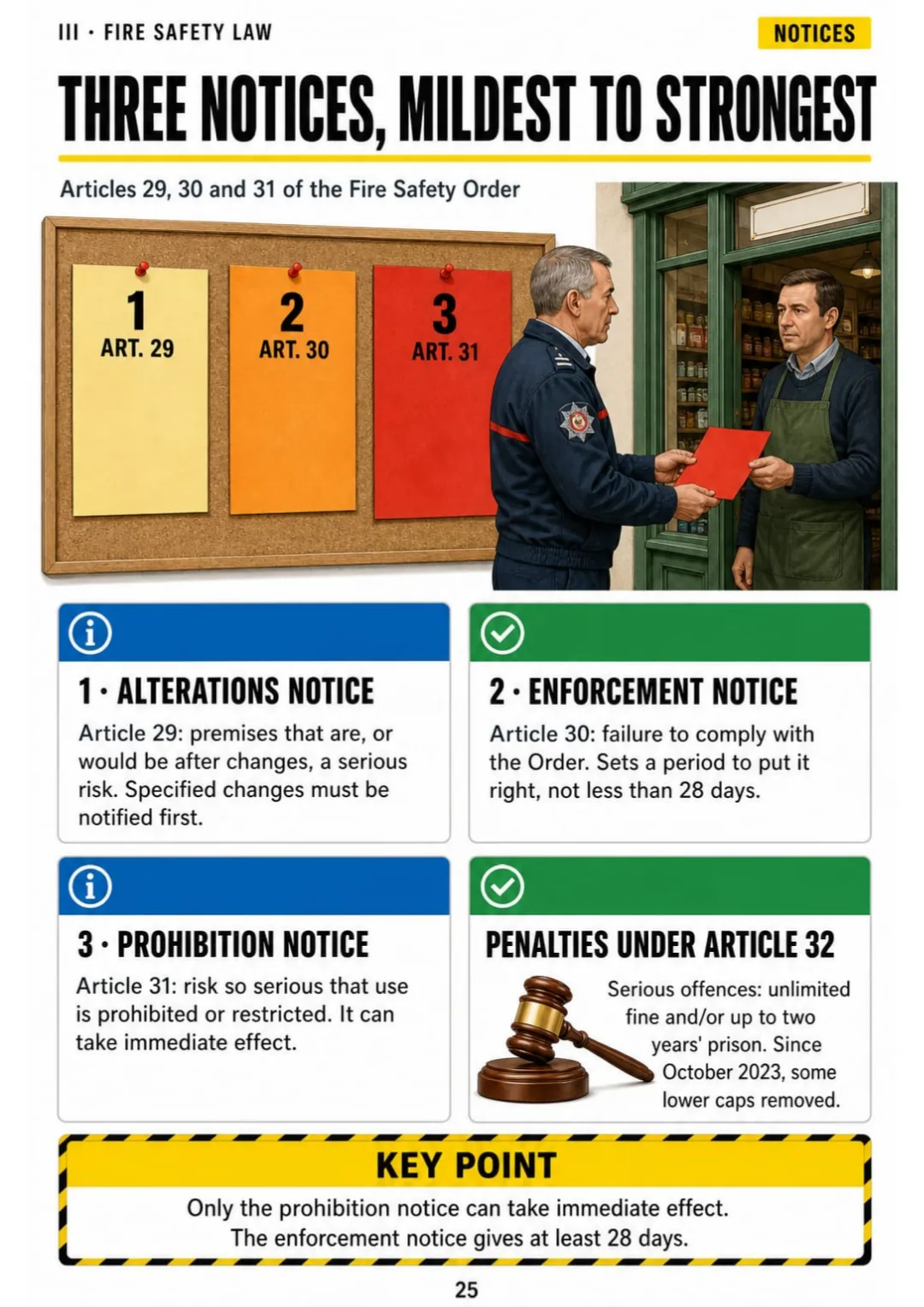
Art. 29 alterations, Art. 30 enforcement (28+ days), Art. 31 prohibition (immediate).
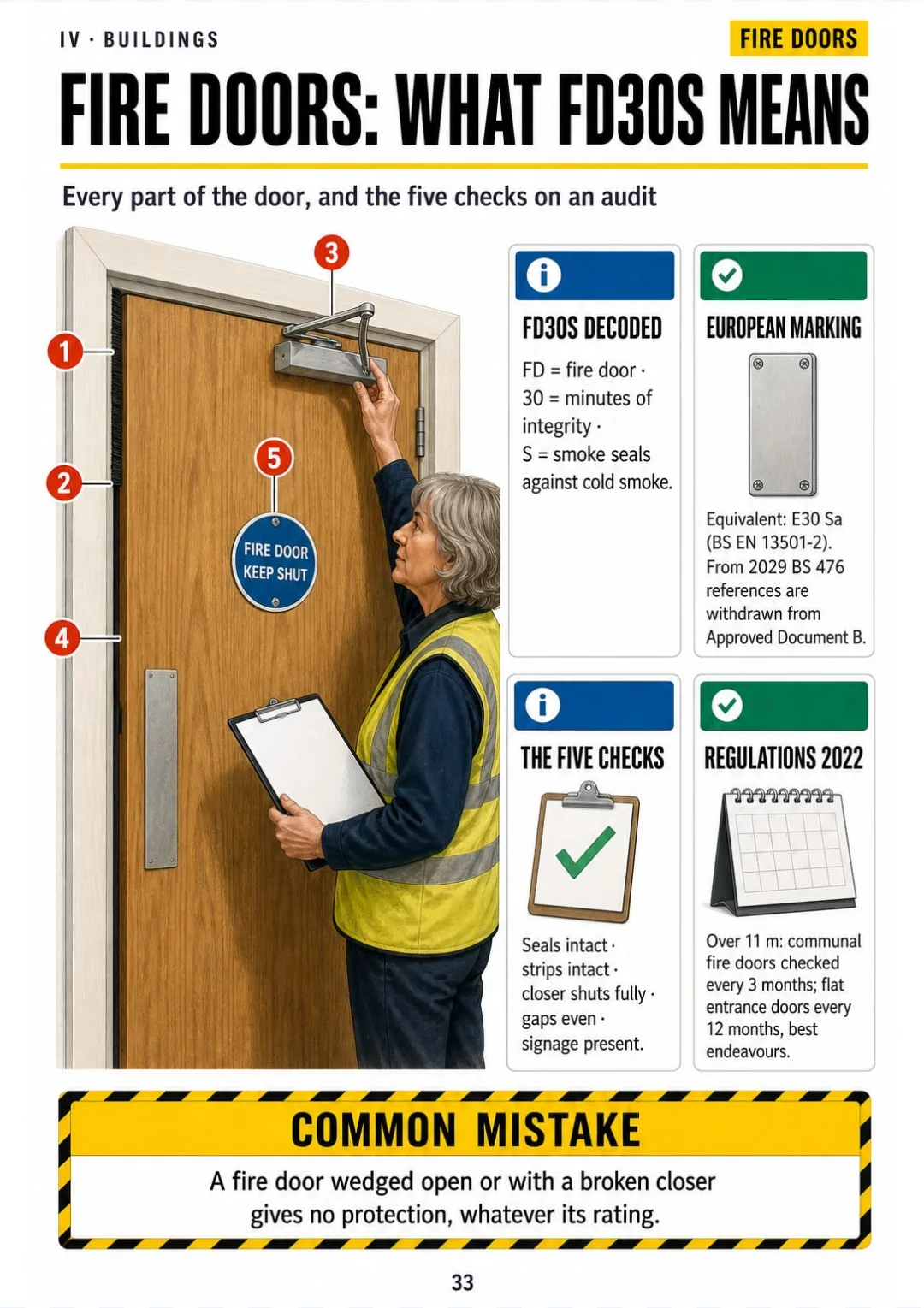
FD30S = 30 minutes integrity + smoke seals (E30 Sa): seals, strips, closer, gaps, signage
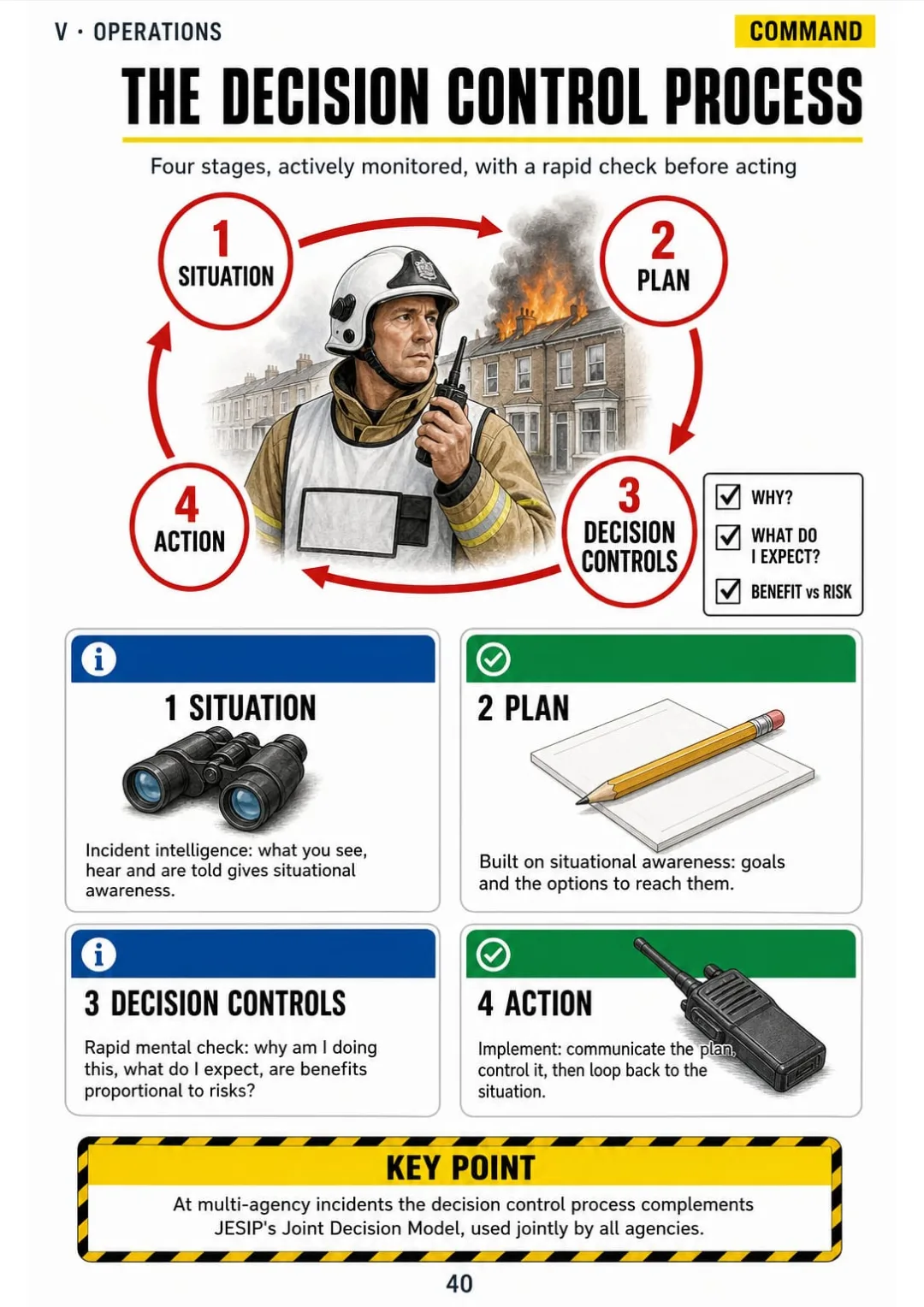
NFCC decision control process: Situation → Plan → Decision controls → Action
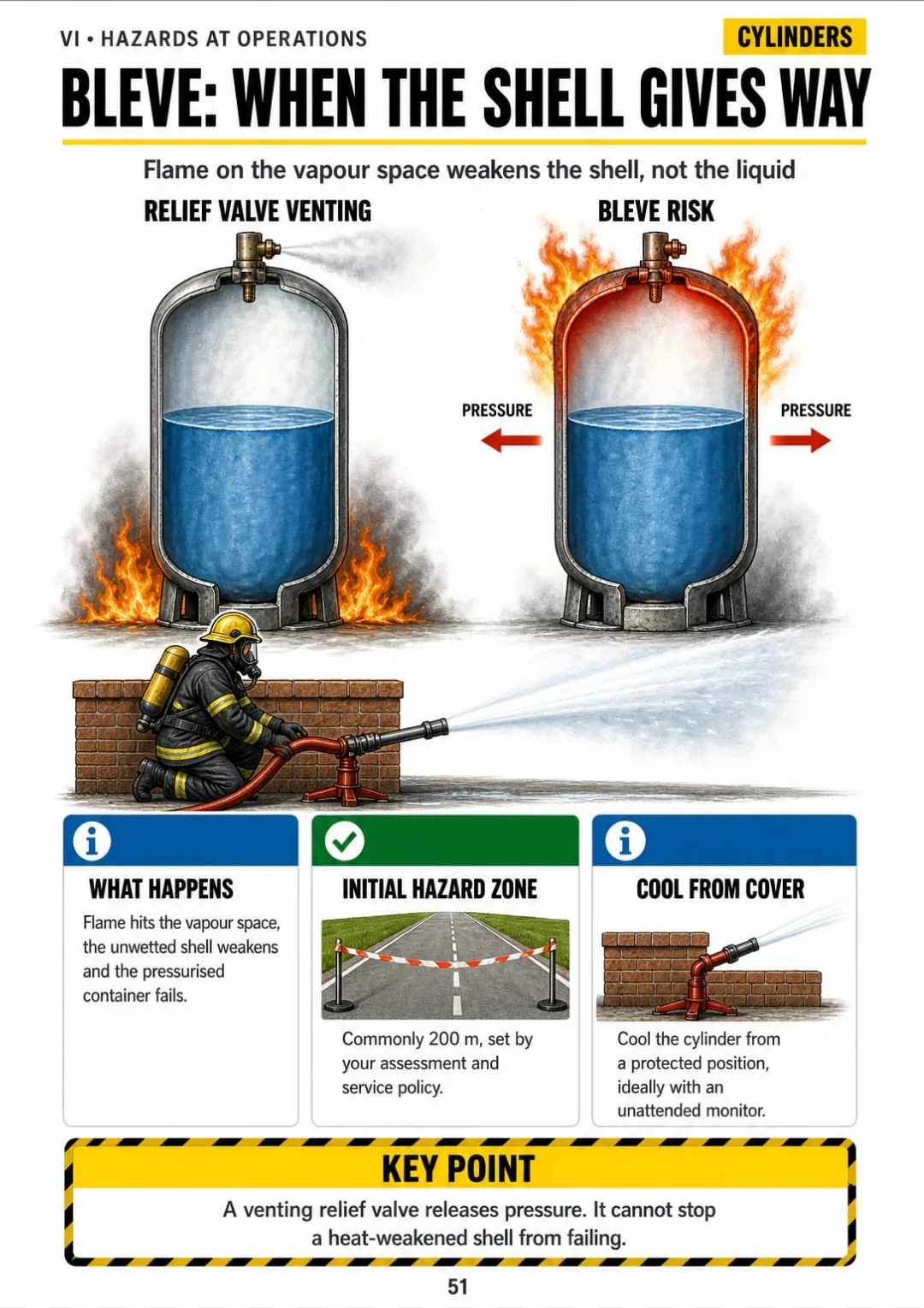
BLEVE: flame on the vapour space weakens the shell. Initial hazard zone commonly 200 m.
1 bar ≈ 10 m, 11 m and 18 m, articles 29–31, M/ETHANE: tick before the exam.

Swipe to see more →

These are real pages from the book. The table of contents is the full one: 8 parts and 63 topics.

The Problem Isn't You. It's How It Was Explained.

Exam paper, hydraulics question: a 12.5 mm nozzle at 4 bar, how many litres a minute? You've run hose for years. On paper, you can't get to the number.

The manual has the answer, spread over two pages of paragraphs: a formula, a constant, a square root, a note on nozzle diameter. Read after a night shift, it's gone by morning.

Lift: theoretical ≈ 10 m, practical much lower · hydrant plate: mm above, metres below

In the book, nozzle flow is one page: the branch drawn with its 12.5 mm nozzle, the formula Q ≈ 0.67 × d² × √P in a box, and one worked example: 4 bar, about 210 litres a minute.

Every other topic gets the same treatment: friction loss in hose, pressure and head, extinguisher colour bands, the three enforcement notices, FD30S fire doors. Each one on its own page.

You see the drawing, you follow the numbers, and you work out the flow without going back to the manual.

COMPARE FOR YOURSELF

Same Topic, Two Ways to Revise It

THIS
  • The manual: line after line
  • Three notices buried in one long paragraph
  • You reach the exam still unsure
Under the Regulatory Reform (Fire Safety) Order 2005, an enforcing authority which is of the opinion that the responsible person has failed to comply with any provision of the Order may serve an enforcement notice specifying the failure and the steps required, allowing a period for remedy of not less than 28 days; where the use of premises involves a risk to relevant persons so serious that use ought to be prohibited or restricted, a prohibition notice may be served, which may take effect immediately, while an alterations notice may separately require the authority to be notified before specified changes are made.
FOR THIS
  • The three notices drawn, mildest to strongest
  • Articles 29–31, 28 days and «immediate» in one box
  • You see it and it makes sense
BS EN 2: A solids · B liquids · C gases · D metals · F cooking oils – no Class E
CONTENTS

Take a Look at the 8 Parts and 63 Topics

Fire science, extinguishing media and hydraulics, fire safety law, fire safety in buildings, operations and incident command, hazards at operations, management and leadership, and exam technique: 67 pages, all illustrated.

IFire Science · pp. 5-14
  1. The Fire Triangle and the Fire Tetrahedron
  2. Flash Point, Fire Point and Auto-Ignition Temperature
  3. Flammable Limits: Too Lean, Too Rich
  4. Conduction, Convection, Radiation
  5. The Stages of a Compartment Fire
  6. The Smoke Layer and the Neutral Plane
  7. Flashover, Drawn as a Room
  8. Backdraught, Drawn as a Room
  9. Fire Gas Ignitions and Smoke Explosions
  10. Products of Combustion
IIExtinguishing Media and Hydraulics · pp. 15-21
  1. Classes of Fire (BS EN 2)
  2. Extinguishers and Their Colour Bands
  3. Foam: Low, Medium and High Expansion
  4. Pressure, Head and Height
  5. Nozzle Flow in Litres per Minute
  6. Friction Loss in Hose
  7. Pumping from Open Water and Hydrants
IIIFire Safety Law · pp. 22-29
  1. Which Law Applies Where
  2. The Responsible Person
  3. The Five Steps of a Fire Risk Assessment
  4. Enforcement: Alterations, Enforcement and Prohibition Notices
  5. The Fire Safety Act 2021
  6. The Fire Safety (England) Regulations 2022
  7. The Building Safety Act 2022 in One Page
  8. Fire Safety Duties of the Fire and Rescue Authority
IVFire Safety in Buildings · pp. 30-38
  1. Approved Document B: B1 to B5
  2. Means of Escape on the Floor Plan
  3. Compartmentation and Fire-Stopping
  4. Fire Doors: What FD30S Means
  5. Reading Fire Resistance: R, E, I
  6. Fire Detection Categories (BS 5839-1)
  7. Sprinklers and Fixed Installations
  8. Evacuation Strategies
  9. Facilities for the Fire Service
VOperations and Incident Command · pp. 39-48
  1. National Operational Guidance: How It Is Organised
  2. The Decision Control Process
  3. Incident Command Levels 1 to 4
  4. Command Structure and Span of Control
  5. Dynamic and Analytical Risk Assessment
  6. The Safe Person Concept and Hierarchy of Control
  7. JESIP: The Five Principles
  8. METHANE and the Joint Decision Model
  9. Cordons and the Incident Ground
  10. Firefighting Tactics: Offensive and Defensive
VIHazards at Operations · pp. 49-54
  1. Breathing Apparatus Entry Control
  2. Hazardous Materials: Reading the Placard
  3. BLEVE and Cylinders Involved in Fire
  4. Building Collapse Indicators
  5. Road Traffic Collisions
  6. Water and Height: Low-Frequency, High-Risk Incidents
VIIManagement and Leadership · pp. 55-62
  1. Health and Safety Law for Managers
  2. Plan, Do, Check, Act (HSG65)
  3. Investigating an Accident or Near Miss
  4. Action-Centred Leadership
  5. How Teams Develop
  6. Motivation and Performance
  7. Core Code of Ethics and Equality
  8. Planning, Inspection and Standards
VIIIExam Technique and Final Review · pp. 63-67
  1. Command Words: State, Describe, Explain, Evaluate
  2. A Six-Line Answer, Built Step by Step
  3. Using Drawings in Your Answer
  4. Pairs That Get Mixed Up
  5. Last-Week Checklist

One Page, One Topic, All Clear

Think of it this way:

It's exam day. The question asks you to explain the difference between flashover and backdraught in about six lines. You've got the knowledge; what you need is the picture.

In the book, you open the backdraught page and see it drawn as a room: the under-ventilated fire, the door opening, the sudden air rushing in. Right beside it, flashover: driven by heat, not air.

FD30S = 30 minutes integrity + smoke seals (E30 Sa): seals, strips, closer, gaps, signage

Same with the three notices from Article 29 to 31, FD30S fire doors, the decision control process, nozzle flow and a Hazchem code like 2YE: each one on its own page.

Fire Service Exam Illustrated is 67 illustrated pages in 8 parts, ending with exam command words, a six-line answer built step by step and a last-week checklist.

What you see drawn, you don't have to memorize.

What's Inside Fire Service Exam Illustrated:

Ipp. 5-14

Fire Science

The fire triangle and tetrahedron, flash point and fire point, flammable limits, heat transfer, compartment fire stages, the neutral plane, flashover, backdraught, fire gas ignitions and products of combustion. So you can explain what a fire is doing in a room, stage by stage.

IIpp. 15-21

Extinguishing Media and Hydraulics

Classes of fire, extinguishers and their colour bands, foam expansion ratios, pressure and head, nozzle flow in litres per minute, friction loss and pumping from open water and hydrants.

IIIpp. 22-29

Fire Safety Law

Which law applies where, the responsible person, the five steps of a fire risk assessment, the three notices, the Fire Safety Act 2021, the 2022 Regulations, the Building Safety Act and the authority's duties. So you can name the right article and the right notice without rereading the Order.

IVpp. 30-38

Fire Safety in Buildings

Approved Document B from B1 to B5, means of escape on the floor plan, compartmentation, FD30S fire doors, R, E and I ratings, detection categories, sprinklers, evacuation strategies and facilities for the fire service.

Vpp. 39-48

Operations and Incident Command

How National Operational Guidance is organised, the decision control process, incident command levels, span of control, dynamic and analytical risk assessment, the safe person concept, JESIP, METHANE, cordons and tactics. So you can talk through your decisions at an incident in a clear, fixed order.

VIpp. 49-54

Hazards at Operations

BA entry control, reading a Hazchem placard, BLEVE and cylinders, building collapse indicators, road traffic collisions, and water and height incidents.

VIIpp. 55-62

Management and Leadership

Health and safety law for managers, Plan-Do-Check-Act, investigating an accident or near miss, action-centred leadership, team development, motivation, the Core Code of Ethics and planning and standards.

VIIIpp. 63-67

Exam Technique and Final Review

Command words from state to evaluate, a six-line answer built step by step, using drawings in your answer, the pairs that get mixed up and a last-week checklist.

At the end of the book: An exam technique section: command words, a six-line answer built step by step and a last-week checklist.
Plus: 2 Free Books

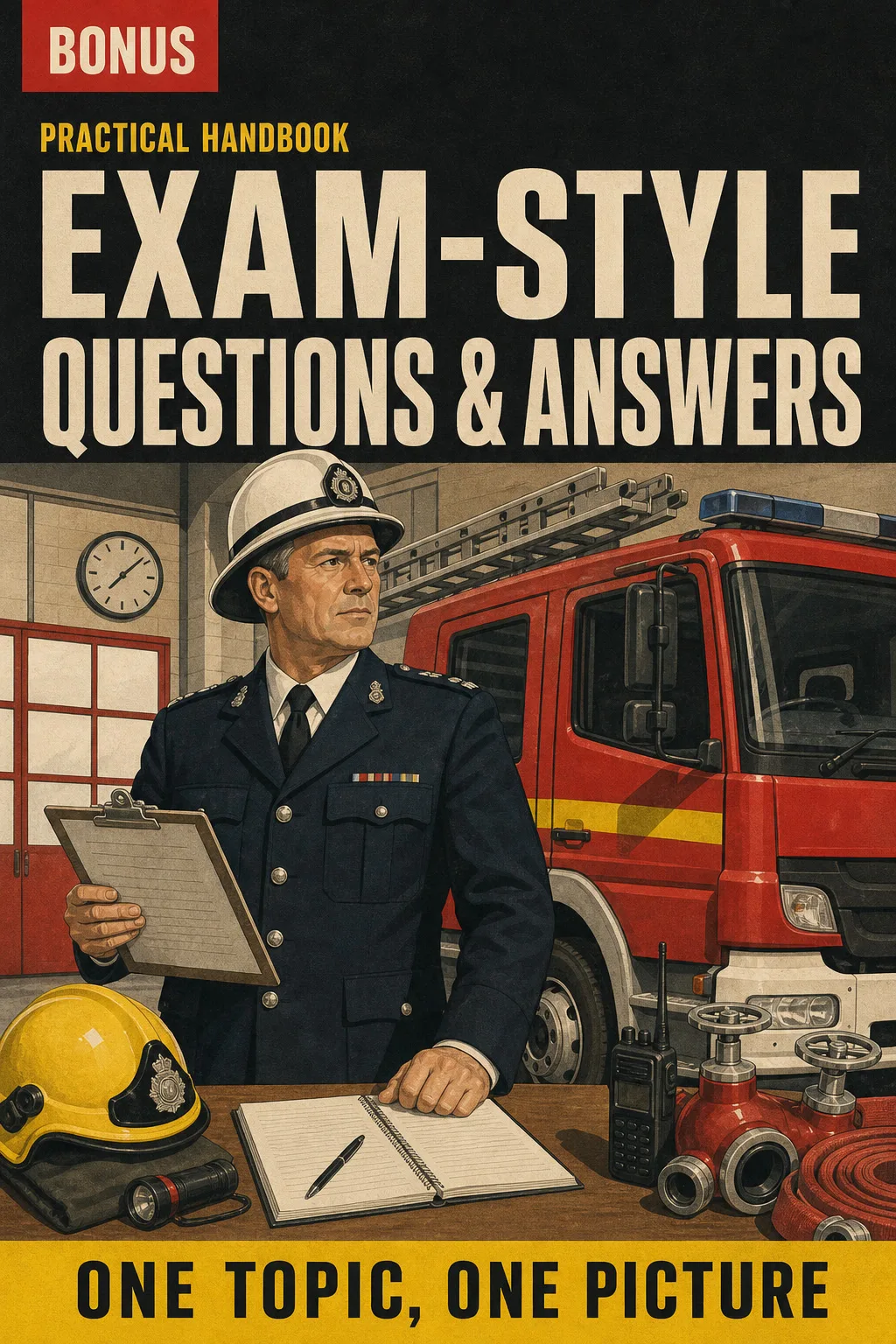
Exam-Style Questions & Answers

BONUS 1: «Exam-Style Questions & Answers»

Value on its own: US$ 17.90

Practise with exam-style questions across all 4 areas, with short model answers so you can see exactly how much to write and what to include.

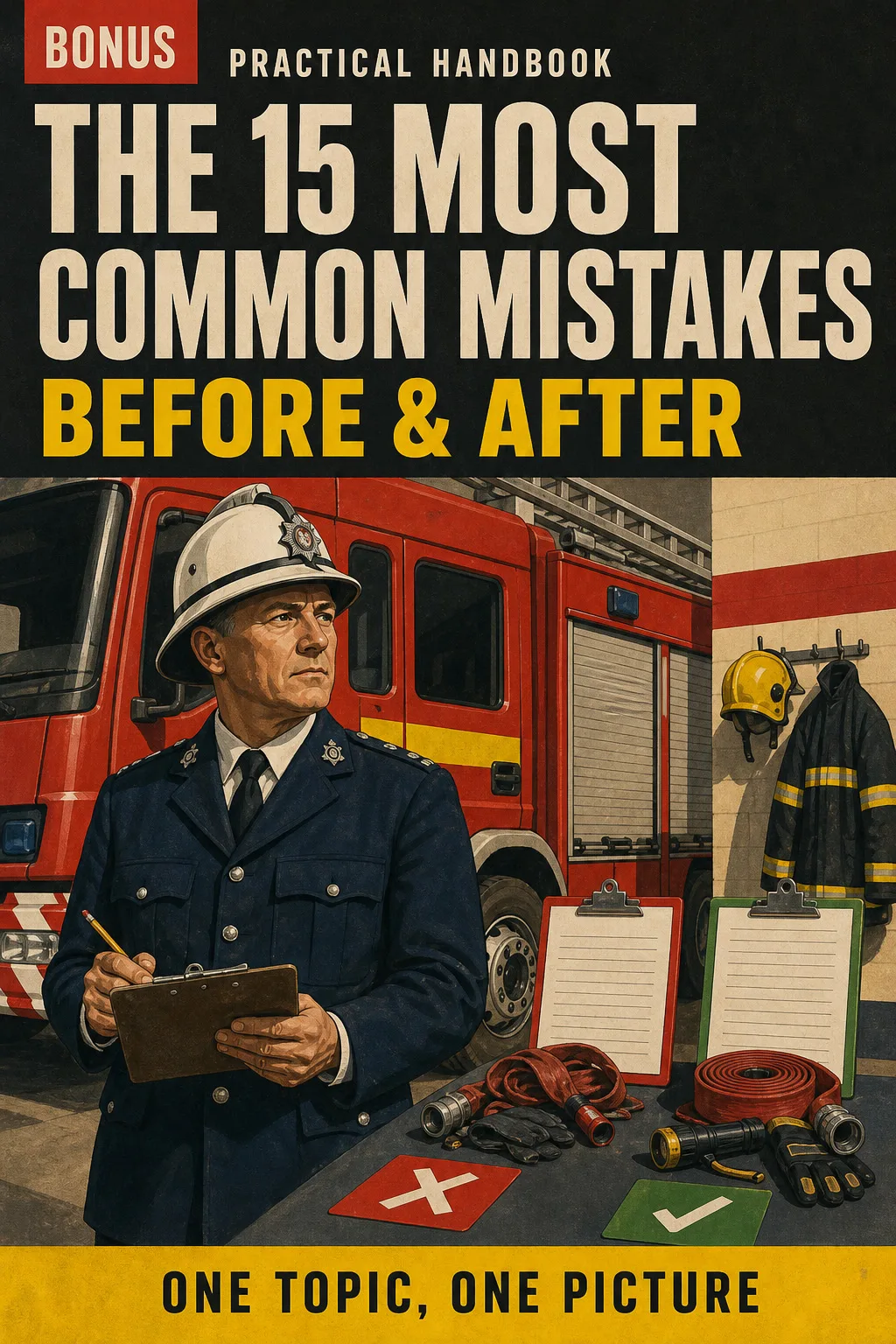
The 15 Most Common Mistakes: Before & After

BONUS 2: «The 15 Most Common Mistakes: Before & After»

Value on its own: US$ 14.90

See the mistakes candidates make most often, from mixing up flashover and backdraught to vague answers on the responsible person, each one corrected side by side.

Fire Service Exam Illustrated with 2 Free Books

  • Fire Service Exam Illustrated: 67 illustrated pagesUS$ 63
  • BONUS 1: Exam-Style Questions & AnswersUS$ 17.90
  • BONUS 2: The 15 Most Common Mistakes: Before & AfterUS$ 14.90
  • High-resolution PDF to printIncluded
Total value US$ 95.80
YOUR PRICE:
US$ 27
You save US$ 68.80
YES, I WANT FIRE SERVICE EXAM ILLUSTRATED FOR US$ 27

📄 This is a digital PDF book sent to your email: nothing is printed or shipped.

Secure purchaseEncrypted payment30-day guarantee

PDF by email: We email you Fire Service Exam Illustrated as a PDF, together with the two free books. It's a single payment: no installments, no extra charges.

Who This Book Is For

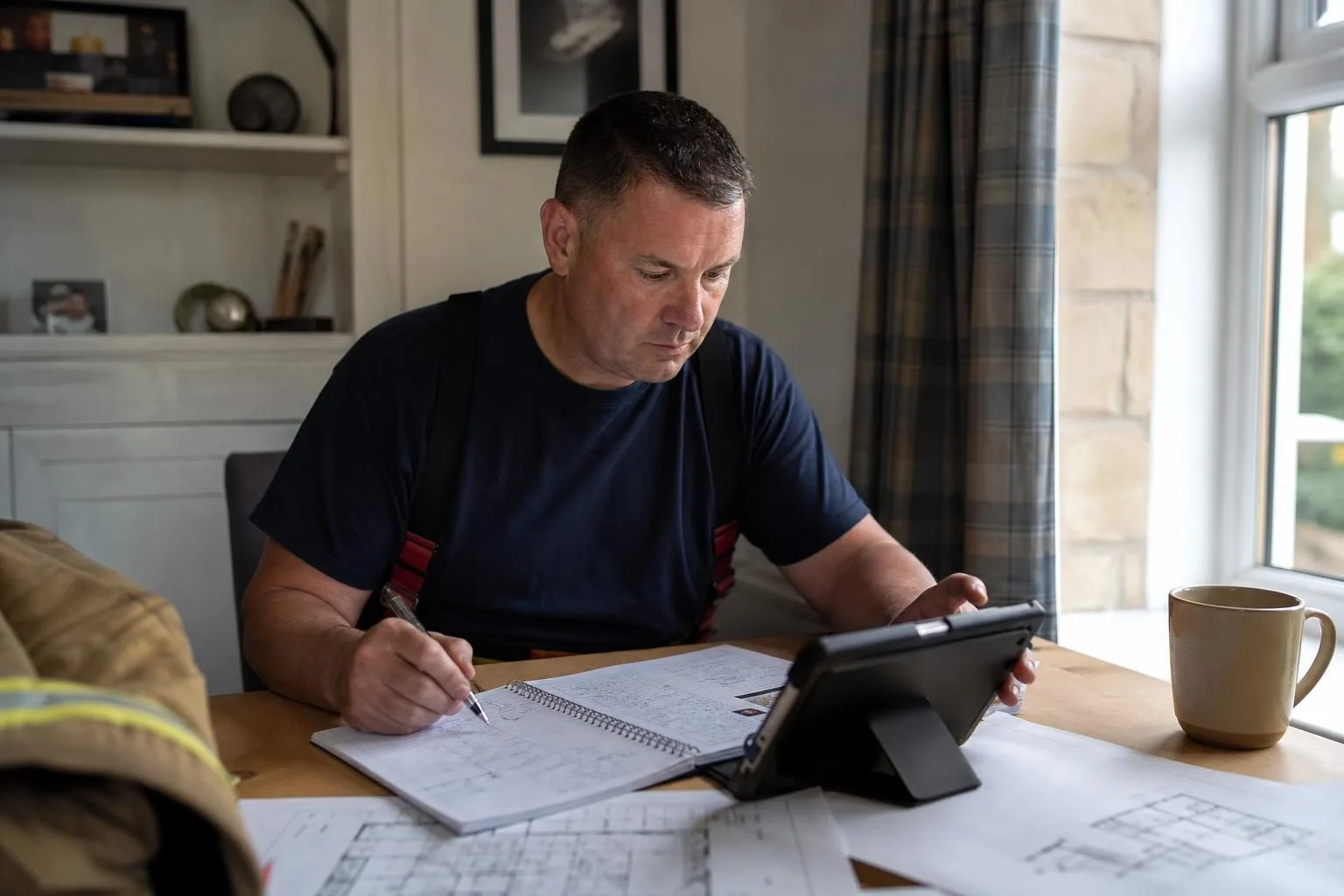
You're revising between shifts

You're revising between shifts

One topic per page, so a short break is enough to cover one drawing and its key facts, even after a night shift.

Your exam date is set

Your exam date is set

The whole syllabus in order, with command words and a six-line answer method, so you know how to put on paper what you already do on the fireground.

You already work in fire safety or lead a watch

You already work in fire safety or lead a watch

The Fire Safety Order, Approved Document B and the decision control process drawn on single pages, to keep at hand at the station.

Everything You Get Today

US$ 95.80US$ 27
YES, I WANT FIRE SERVICE EXAM ILLUSTRATED FOR US$ 27

📄 This is a digital PDF book sent to your email: nothing is printed or shipped.

30DAYS
GUARANTEE

30-Day Guarantee

Try Fire Service Exam Illustrated for 30 days, bonus books included.

We refund everything if the file won't open, if the book isn't what you see here, if you were charged twice or if the email doesn't arrive. Just email us.

You pay once. No subscriptions.

Frequently Asked Questions

Is it for me if I've been in the service for years and haven't sat a written exam since?

Yes. It isn't a beginner's book: it assumes you know the fireground and helps you put what you know into clear written answers, one topic per page.

Where does the content come from?

It's checked against current sources: the Regulatory Reform (Fire Safety) Order 2005, the Fire Safety Act 2021, Approved Document B, National Operational Guidance, JESIP and the Health and Safety at Work etc. Act 1974. Fire safety law and building regulations follow England; Part III opens with a page on which law applies where, so if you serve in Scotland, Wales or Northern Ireland, check those topics against your own nation's rules.

Which exam is it for, and is it official?

It covers the topics written promotion exams for UK firefighters draw on: fire science, hydraulics, fire safety law, building fire safety, operations, hazards, management and exam technique. The full index is open on this page, so you can compare it topic by topic with your own exam's syllabus. It's an independent study book, not produced or endorsed by the IFE, the NFCC or any fire and rescue service.

My service already gives me the manuals and NOG for free. Why this?

Keep using them: this book doesn't replace your service's training, development programme or official guidance. What it adds is the same topics cut down to one drawn page each, plus exam technique: command words, a six-line answer built step by step and exam-style questions.

Are the practice questions the real exam questions?

No. They're exam-style questions written for this book, with short model answers so you can see how much to write.

When and how do I get it?

The book and the 2 free books arrive as a PDF by email.

Do I have to pay every month?

No. It's a one-off payment. No subscription.

Can I have it on paper?

It's a PDF, not a printed book. You can print it at home or at the station, the whole book or just the pages you need.

How does the refund work?

You have 30 days. We refund everything if the file won't open, if the book isn't what you see on this page, if you were charged twice or if the email doesn't arrive: just email us.

Before You Close This Page

No more rereading that doesn't stick.

Backdraught, nozzle flow and the three notices: you see them drawn, and that's it.

You walk into the exam knowing where everything is.

Drawings make studying faster.

The book is right below.

One-time payment: US$ 27 · Guarantee: 30 days · PDF by email

YES, I WANT FIRE SERVICE EXAM ILLUSTRATED FOR US$ 27

📄 This is a digital PDF book sent to your email: nothing is printed or shipped.